

IWRA: Building a Shared Space for Wildlife Rescue and Rehabilitation Centres Across Indonesia


Across Indonesia, wildlife rescue and rehabilitation is carried out every day by dedicated people working in wildlife rescue centres, specialised conservation institutions, conservation organisations, and in the field. Their work may take place in different regions and under very different circumstances, but they share a common commitment: giving wildlife a second chance.
Behind every rescue and rehabilitation effort is a wealth of experience, knowledge, expertise, facilities, and dedicated human resources. Each organisation has developed its own strengths and learned valuable lessons from working on the ground.
Yet there is an important question: what could we achieve if these experiences, knowledge, and resources were more closely connected?
In a country as vast and diverse as Indonesia, no single organisation can address every challenge alone. Connecting the people and institutions working for wildlife can create opportunities to learn from one another, strengthen collective capacity, and develop solutions together.
It is from this need for connection and collaboration that the Indonesian Wildlife Rescue Alliance (IWRA) was born.
IWRA was established as a shared platform for wildlife rescue and rehabilitation centres across Indonesia—a space to connect, exchange knowledge and experiences, build meaningful collaboration, and work together to address the challenges faced on the ground.
A Moment to Come Together and Listen
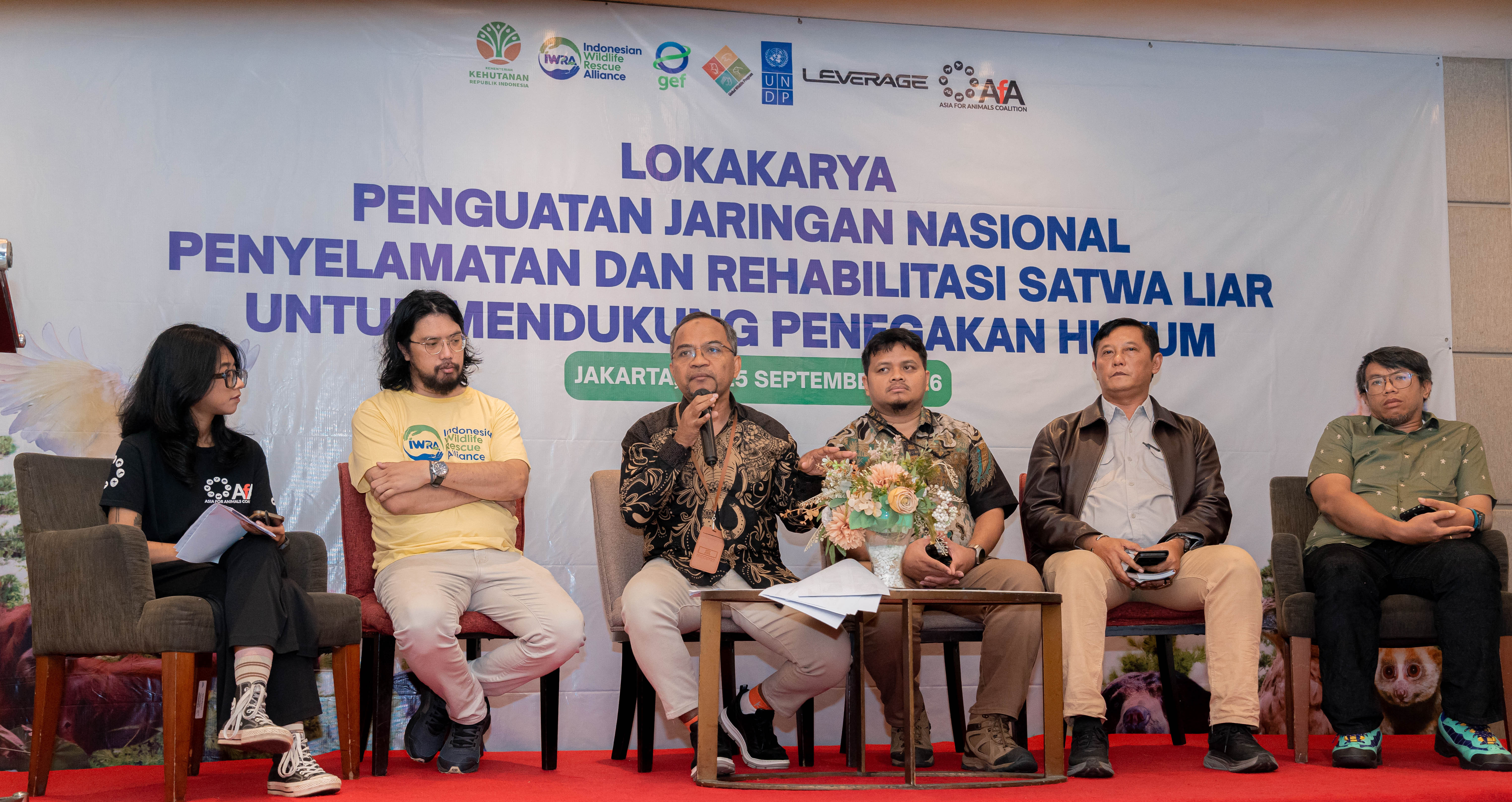
On 24–25 September 2026, IWRA hosted the Workshop on Strengthening the National Wildlife Rescue and Rehabilitation Network to Support Law Enforcement in Jakarta.
The event brought together representatives from wildlife rescue and rehabilitation centres and specialised conservation institutions from across Indonesia, alongside representatives from the Ministry of Forestry, conservation organisations, and other relevant partners.
For IWRA, this gathering was more than just a workshop.
It was an important moment in IWRA’s journey to introduce itself as a national network while creating space to listen directly to the needs, challenges, experiences, and aspirations of those who have long been working on the front lines of wildlife rescue and rehabilitation.
Because a network cannot be built simply through a name or an organisational structure.
A network is built through relationships, trust, communication, and a shared willingness to work together.
We Cannot Do It All Alone
Wildlife rescue and rehabilitation is complex work.
Wildlife can come from many different circumstances and backgrounds—seized from illegal trade, confiscated from illegal pets, rescued from human-wildlife conflict, or rescued from situations that put their lives at risk.
Each animal then requires a different course of care, from intake and identification to health assessments, treatment, rehabilitation, and, where possible, release back into the wild. Others may require long-term care.
Behind every one of these processes are many different people and institutions, each with an important role to play. Government agencies provide the mandate and authority. Law enforcement agencies carry out legal processes. Wildlife rescue and rehabilitation centres provide the facilities and expertise needed to care for animals. Veterinarians and other professionals provide technical support. Conservation organisations, academics, local communities, and many other partners also make valuable contributions.
Given this complexity, we recognise that no single organisation can do everything alone.
That is why collaboration matters—and it is from this shared understanding that IWRA was born.
IWRA Is Not Here to Regulate or Compete
From the beginning, IWRA has been built with a clear understanding of its role.
IWRA is not a regulator.
IWRA is not a competitor.
IWRA is not a donor.
And IWRA is not an organisation created to replace the work of those already working in the field.
Instead, IWRA seeks to be a connector—a space that helps bring people and organisations together.
Through this network, the experience of one organisation can become a learning opportunity for another. Specific needs for expertise can be connected with individuals or institutions that have the relevant capacity. Good practices can be shared, while common challenges can be discussed openly.
In this way, IWRA hopes to become a kind of “shared space” for those working in wildlife rescue and rehabilitation across Indonesia.
Not a place that seeks to make everyone the same, but a space where we can remain different while finding ways to work together.
From a Gathering to a Shared Journey
This workshop marked one of the first important steps in that journey. It created a space for different stakeholders to talk not only about what is already working, but also about the challenges that remain.
It was an opportunity to discuss not only what we need from one another, but also what we can contribute to each other. Building a network does not mean that we must always share the same perspectives or approaches. On the contrary, the diversity of experiences, capacities, and perspectives within the sector can be a strength—helping us discover better ways of working together.
While respecting the mandate, authority, and responsibilities of each stakeholder, IWRA aims to provide a space where collaboration can grow and meaningful connections can take shape.
Building the Future of Wildlife Rescue and Rehabilitation Together
IWRA’s journey has only just begun. There is still much to build, many challenges to address, and many questions that need to be answered together. But one thing has become increasingly clear:
Stronger wildlife rescue and rehabilitation begins with stronger collaboration.
IWRA is here to help create the space for that collective effort. A space to share. A space to learn. A space to connect needs with expertise and capacity. And a space to develop solutions together.
Because ultimately, we are building more than a network. We are building a stronger foundation for the future of wildlife rescue and rehabilitation in Indonesia—one where knowledge is shared, capacities are strengthened, and no one has to face the challenges alone.
With Gratitude
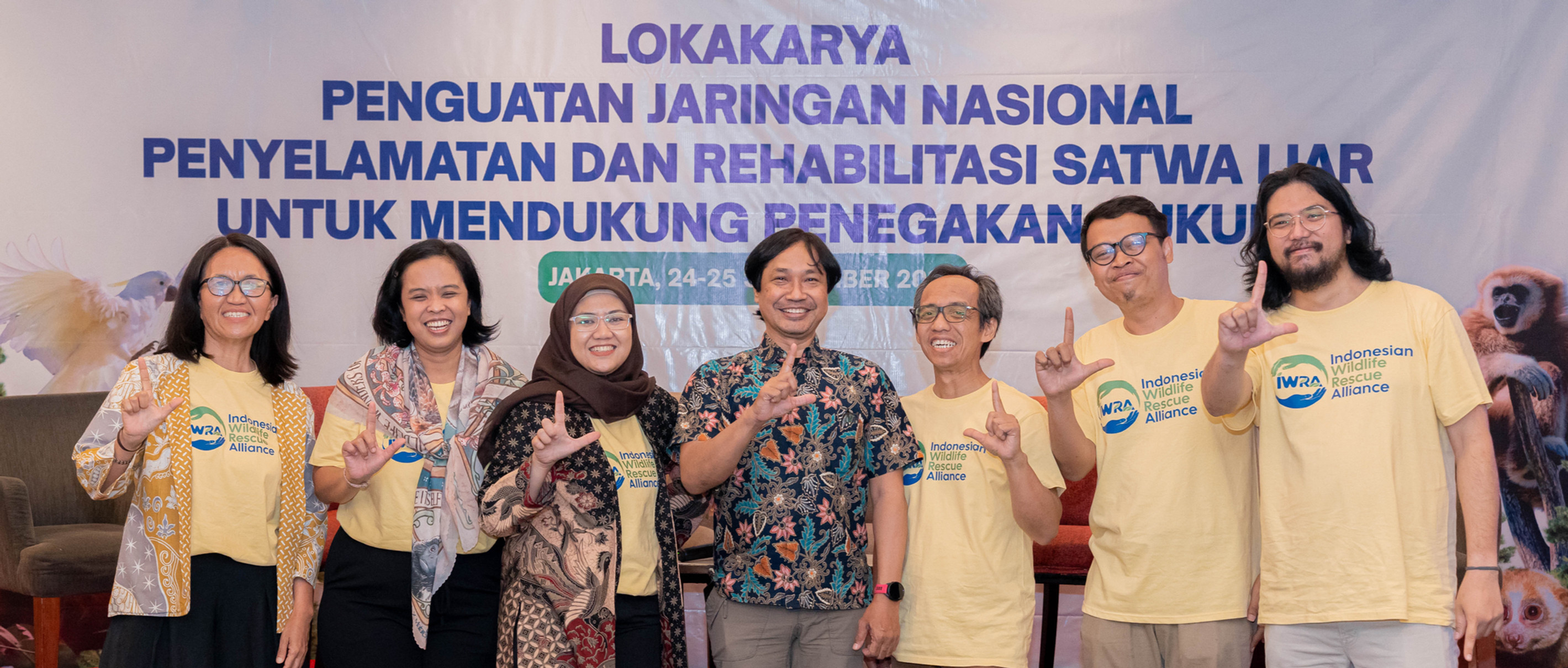
We would like to express our sincere appreciation to everyone who supported the Workshop on Strengthening the National Wildlife Rescue and Rehabilitation Network to Support Law Enforcement, held on 24–25 September 2026 in Jakarta.
Our thanks go to the Ministry of Forestry of the Republic of Indonesia, particularly the Directorate General of Conservation of Natural Resources and Ecosystems (Ditjen KSDAE) and the Directorate General of Forestry Law Enforcement (Ditjen Gakkum Kehutanan); the Asia for Animals Coalition; the UNDP LEVERAGE Project; and all representatives of wildlife rescue and rehabilitation centres who took part in the workshop.
We are equally grateful to the conservation organisations and other partners who joined us and contributed their knowledge, experiences, and perspectives.
Thank you for being part of this important step in building a stronger and more connected wildlife rescue and rehabilitation network in Indonesia.
Comments